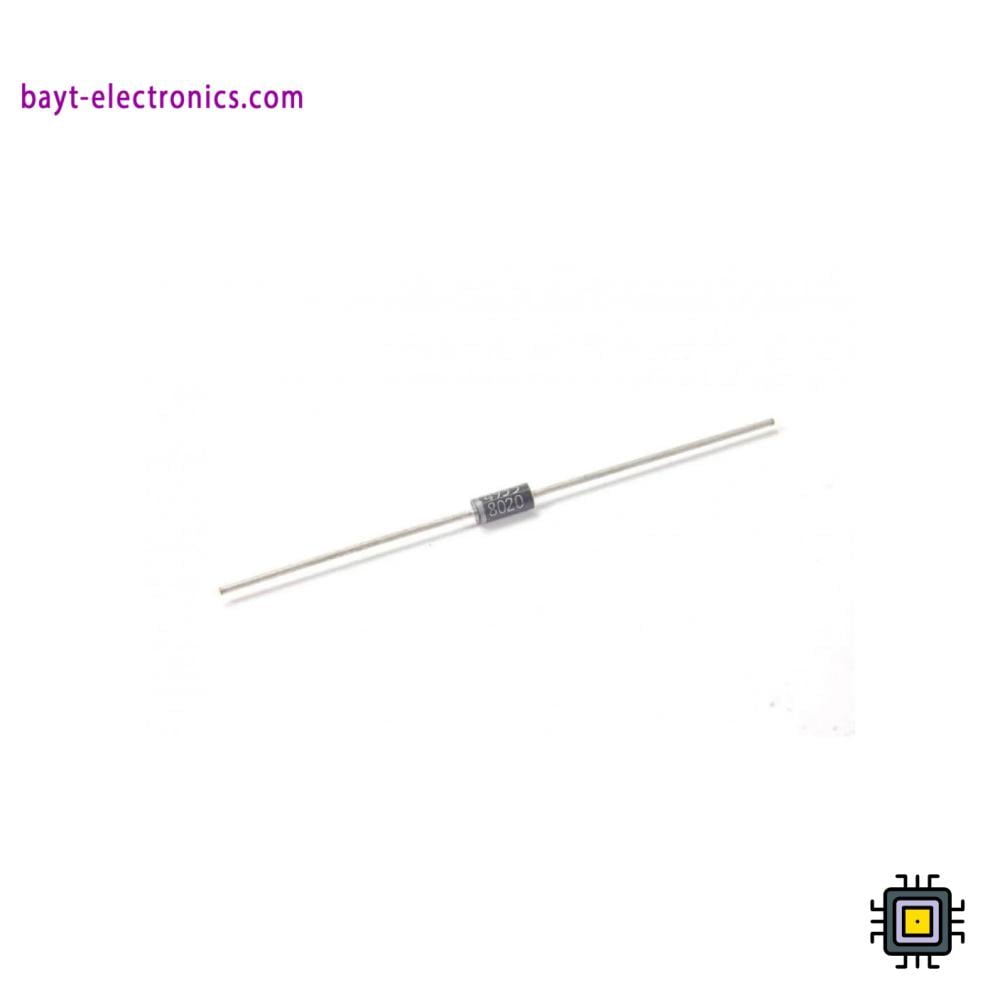
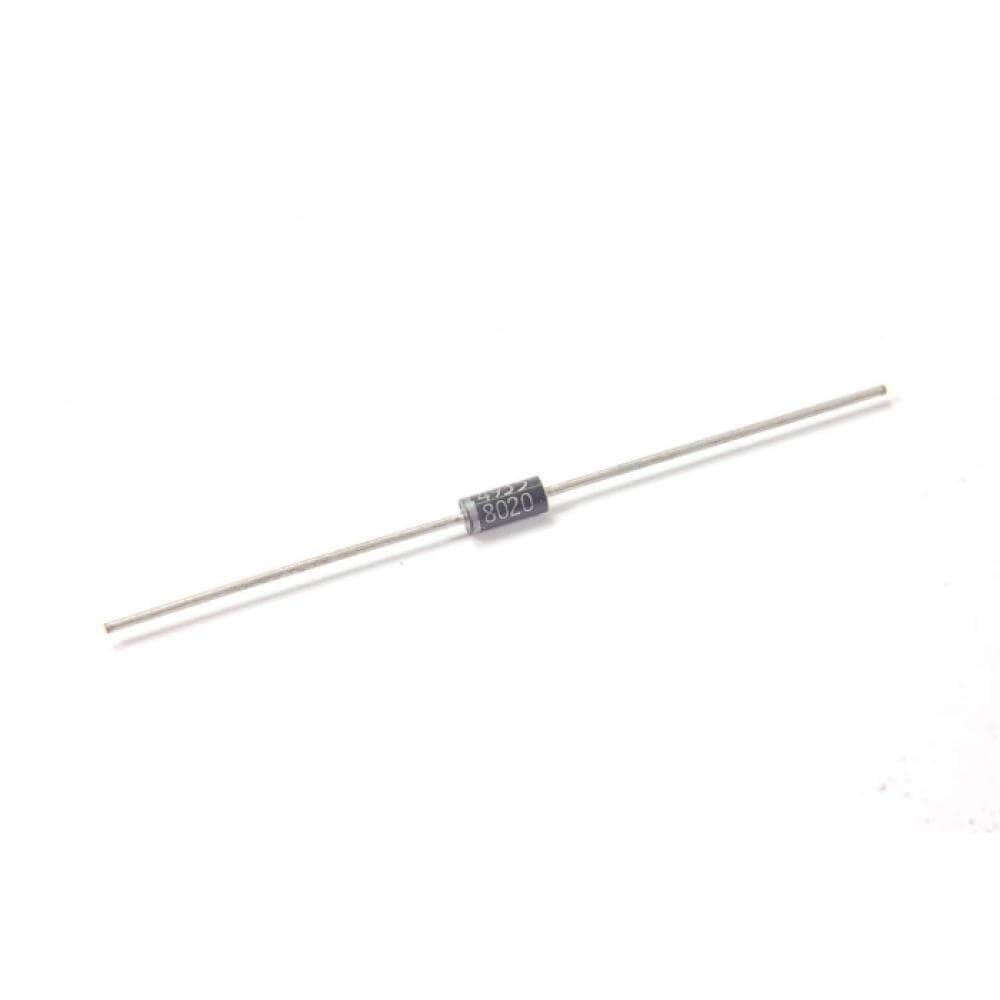
⚡ Diode - Essential Electronic Component for Current Control ⚡
A diode is a fundamental electronic component used to allow electric current to flow in one direction while blocking it in the opposite direction. It consists of two main terminals:
- Anode (A) - The terminal that receives current.
- Cathode (K) - The terminal that allows current to pass when a proper voltage is applied.
Diodes are widely used in rectification, over-voltage protection, and signal correction in electronic circuits.
✅ General Specifications (varies by type):
- Maximum Reverse Voltage (VR): Varies per model, typically 50V - 1000V.
- Maximum Forward Current (IF): 1A to 10A depending on type.
- Fast switching time for reliable performance.
- Applications: Rectification, circuit protection, and noise reduction.
🔹 Popular Available Types:
- 1N4001 / 1N4002 / 1N4007 - General-purpose rectifier diodes.
- 1N5397 / 1N5398 / 1N5399 - Higher power rectifier diodes.
- 1N5408 - Rectifier diode with up to 3A current handling.
- RL207 - General-purpose diode.
- 1N5822 - Schottky diode for faster switching speed.
🔹 Key Features:
✔ Allows current to flow in one direction only.
✔ Protects circuits from reverse voltage damage.
✔ Efficiently converts AC power to DC power.
✔ Available in multiple types to suit different applications.
📌 Common Applications:
- Rectifying AC power to DC.
- Protecting circuits from reverse voltage spikes.
- Reducing noise in electronic signals.
- Used in power supplies and various electronic devices.
🔹 Approximate Weight: Depends on the model, typically under 5g per unit.